
Steel Police Station Buildings
A police station building has to do a job no ordinary commercial structure does: house holding cells, evidence storage, dispatch and a patrol fleet under one secure roof, stay operational through any emergency, and stretch a municipal budget that answers to taxpayers. Universal Steel of America is a US pre-engineered metal building manufacturer, founded in 1995, that engineers law enforcement facilities to your local code and ships them throughout the US and internationally across the Caribbean, Puerto Rico, South America and Africa.
Pre-engineered steel is increasingly the framing system of choice for public safety construction because it pairs clear-span, column-free interiors with the durability, speed and cost discipline that civic projects demand. This page sets out why a pre-engineered metal building suits a police station, how the structure adapts to law enforcement spaces, and the engineering that goes into a building meant to serve a community for decades.
Request a quote
Why pre-engineered steel suits a police station building
Municipal building committees weigh three things on every public safety project: cost to the taxpayer, speed of delivery, and how long the building will last. A pre-engineered metal building (PEMB) answers all three. The primary and secondary framing, roof and wall panels are engineered as one system and fabricated in the plant before they reach the site, so the structure goes up faster than poured concrete or masonry and with fewer weather delays. That compressed timeline gets officers into a permanent facility sooner and reduces the months a department spends in temporary quarters. Steel framing also carries a long service life: it resists fire, mold, rot and pests, and an engineered structure stands up to the high winds and seismic activity a forty-year civic building has to survive.
The structural advantage that matters most for law enforcement is the clear span. Rigid-frame steel carries the roof from the perimeter, so the interior has no load-bearing walls or columns to work around. A police station built this way can be partitioned into administrative offices, a muster room, locker rooms, holding cells, a sally port and prisoner processing, evidence storage, a dispatch and communications center and a vehicle bay, and re-partitioned years later as the department grows, without touching the structure. Universal Steel engineers each building to the wind load, snow load and seismic design category that the International Building Code sets for your jurisdiction, and delivers stamped, code-compliant drawings with it.
Clear-span framing and flexible law enforcement layouts
A police station is really several buildings in one envelope: a public-facing front counter and lobby, a secure work core, a custody and detention zone, and a drive-in fleet bay. Clear-span rigid-frame steel makes that mix possible inside a single column-free shell. Widths run well beyond a hundred feet between sidewalls, so dispatch floors, muster rooms and detective work areas sit wherever the program needs them rather than where a column lands. Because none of the interior walls are structural, a department can reconfigure holding cells, locker rooms, evidence storage or a training room down the line as staffing and policy change, and a future addition bolts onto an engineered endwall instead of forcing a rebuild. This adaptability is the single biggest reason civic planners reach for pre-engineered steel over load-bearing masonry.
Engineered for load, weather and code compliance
A public safety building must stay standing and stay operational when the community needs it most. Universal Steel engineers each police station to its site: the rigid frames, eave height, bracing and anchor design are calculated to the local wind load, ground snow load and seismic design category required by the International Building Code and the authority having jurisdiction. In coastal and hurricane-exposed regions the frame is engineered to the higher design wind speeds those areas demand, the same discipline behind our hurricane and storm-resistant work. Roofing and wall assemblies can be specified for the weather-tightness and continuity a critical facility needs, and the building ships with engineer-engineered structural stamped drawings so it clears plan review without rework. Hardened elements such as ballistic protection, blast-resistant detailing, secure perimeters and a generator-ready electrical layout are accommodated within the steel structure where the project calls for them.
Speed to occupancy and budget stewardship
Public safety projects move on bond timelines and public budgets, and both reward a building that is predictable. Pre-engineering removes much of that uncertainty: the framing system is detailed and fabricated before erection begins, material quantities are fixed at the design stage, and the in-plant fabrication shortens the on-site schedule that drives general-conditions cost. For a municipality that means a firmer delivery date for the department and fewer surprises for the council approving the spend. Steel’s low maintenance and long finish life keep the cost of ownership down over the decades a station stays in service. We keep specific pricing on our dedicated cost guide so a building committee can model the numbers against its own program.
A professional, community-facing exterior
A police station is a civic landmark, and it should read as one. A pre-engineered steel frame does not lock a department into a plain metal box. The structural system is routinely combined with brick, masonry, glass curtain wall, stone and architectural wall panels across the public elevations to give the building the dignified, institutional appearance a community expects, while the engineered steel does the structural work behind the facade. That separation of structure and skin is exactly what lets a department put its budget into a strong, long-lasting frame and a presentable exterior at the same time, rather than choosing between them.
- Building system
- Pre-engineered rigid-frame steel, engineered and fabricated in-house
- Framing
- Clear-span, column-free interior for flexible law enforcement layouts
- Code basis
- Engineered to local wind load, snow load and seismic design category per the International Building Code
- Documentation
- Engineer-stamped, code-compliant drawings supplied for plan review
- Secure spaces
- Holding cells, sally port, prisoner processing and evidence storage accommodated within the steel envelope
- Hardening options
- Ballistic protection, blast-resistant detailing and backup power continuity where specified
- Exterior
- Compatible with brick, masonry, glass and architectural wall panels for a civic appearance
- Durability
- Resistant to fire, mold, rot and pests over a long service life
- Finish warranty
- 25 to 40 year finish warranty available
- Coverage
- Manufactured and shipped throughout the US and internationally across the Caribbean, Puerto Rico, South America and Africa
Steel Police Station Buildings options
Municipal police stations and precinct houses
Full-service stations and precinct houses combining a public lobby, administrative offices, a muster room, locker rooms and a secure work core under one clear-span roof. Column-free framing lets the floor plan follow the department's operational program rather than a structural grid.
Steel government buildingsHolding cells, sally port and prisoner processing
Secure custody zones including holding cells, a drive-in sally port, booking and prisoner processing can be built out within the steel envelope. Non-structural interior walls mean the detention area can be hardened and reconfigured without affecting the building frame.
Dispatch and emergency communications centers
Clear-span interiors suit open dispatch and 911 communications floors that need uninterrupted sightlines and room for consoles and server equipment. The structure can be engineered for backup power continuity so operations carry on during an outage.
Vehicle bays and patrol fleet garages
Drive-through and side-by-side bays for the patrol fleet, impound and evidence vehicles use the same column-free framing as the rest of the station, with eave heights set for service lifts and tall units. Many departments treat this as a steel garage attached to the main facility.
Metal garages and workshopsTraining academies and indoor ranges
Wide, tall clear-span buildings work well for training academies, defensive-tactics mat rooms and indoor facilities that need large unobstructed spans. The same engineering supports the long roof spans these programs require.
Steel government buildingsEvidence and records storage
Secure, climate-stable storage for evidence, property and long-term records benefits from steel's fire and pest resistance and from insulated wall and roof assemblies. Storage areas can be walled off within the main building or built as a dedicated structure.
Metal building insulationShared public safety campuses
Police, fire and EMS often share a public safety campus. Pre-engineered steel scales cleanly across a multi-building site, and the engineering carries directly to a co-located fire station with its high-clearance apparatus bays.
Steel fire station buildingsFederal and defense law enforcement facilities
Universal Steel has delivered for the US military and federal agencies, including a fire station at Fort Buchanan with the US Army Corps of Engineers. Hardened, code-compliant steel facilities suit base police, security forces and federal law enforcement programs.
Steel military and defense buildingsSteel Police Station Buildings questions
Are pre-engineered metal buildings good for police stations?
Yes. Pre-engineered metal buildings are well suited to police stations because they are durable, fast to erect and cost-effective for a municipal budget. Clear-span steel framing creates column-free interiors that can be partitioned into offices, holding cells, dispatch, evidence storage and vehicle bays and reconfigured later as the department grows. The structure is engineered to local wind, snow and seismic requirements, and the steel resists fire, mold and pests over a long service life. The main consideration is to plan heavy structural loads and any future expansion early, because pre-engineered frames are designed efficiently to the loads specified at the design stage.
How much does it cost to build a police station?
The cost of a police station varies widely with size, location, the level of secure and hardened space, and local labor and code requirements, so there is no single figure. Pre-engineered steel typically reduces both the construction schedule and the structural cost compared with conventional masonry or concrete, which helps a municipality control the budget. Universal Steel keeps detailed cost guidance on a dedicated pricing page so a building committee can model the numbers against its own program. We provide a firm quote once the scope is defined.
Can a metal building meet the security requirements of a police station?
Yes. A pre-engineered steel building can accommodate the hardened and secure elements a police station requires. Holding cells, a sally port, prisoner processing, secure evidence storage and controlled perimeters are built out within the steel envelope, and ballistic protection, blast-resistant detailing and backup power continuity can be engineered in where the project calls for them. Because the interior walls are non-structural, security zones can be hardened and rearranged without affecting the building frame.
How long does it take to build a steel police station?
A pre-engineered steel police station is generally faster to deliver than a conventionally built one because the framing system is engineered and fabricated in the plant before it reaches the site, which shortens the on-site schedule and reduces weather delays. The exact timeline depends on the size of the facility, site preparation, permitting and the local authority's review process. The result is a firmer delivery date and fewer surprises on a bond-funded schedule.
Does a steel police station have to look like a metal box?
No. The pre-engineered steel frame does the structural work, while the exterior can be finished in brick, masonry, glass, stone or architectural wall panels to give the building the professional, civic appearance a community expects. This separation of structure and facade is one reason departments choose pre-engineered steel: the budget can go into a strong, durable frame and a dignified public-facing exterior at the same time.
What spans and sizes are possible for a police station building?
Clear-span rigid-frame steel can carry the roof across wide widths with no interior columns, which suits the open dispatch floors, muster rooms and vehicle bays a station needs. Universal Steel engineers each building to the footprint and clear height the program requires and to the local code. Smaller departments often start in a footprint suited to offices and a few bays, while larger headquarters and shared public safety campuses use much wider and longer buildings.
Guides & insights
 Pre-engineered metal buildings
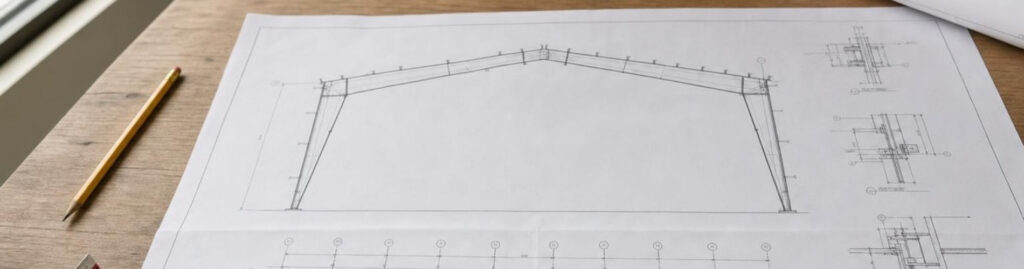
PEMB Drawings: Every Document in the Set, and What Each One Is For
What's in a full set of PEMB drawings, what each sheet is for, what isn't included, and what to check before you…
Read article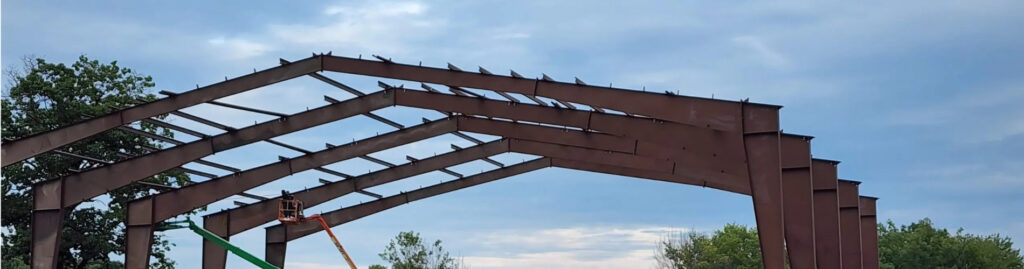 Pre-engineered metal buildings
What Construction Type Is a Metal Building Under the IBC?
What construction type is a metal building? Usually Type II-B under the IBC. When it is II-A or V-B, who decides, and…
Read article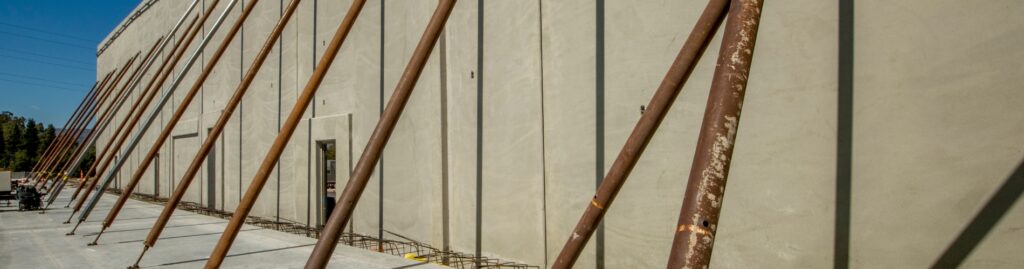 Pre-engineered metal buildings
PEMB vs Tilt-Up Concrete: The Real Differences, and Why It Isn’t Either-Or
PEMB vs tilt-up concrete compared on structure, walls, spans and site needs, plus how tilt-up walls go on a pre-engineered steel frame.
Read articleRequest a Steel Police Station Buildings quote
Pre-engineered, code-stamped and shipped from the closest plant, across the US and internationally.